What is the consequence of living a life surrounded by beauty?
Beauty is not merely something pleasant to look at. From a spiritual point of view, beauty carries a quality of harmony, order, refinement, and vibration that impresses itself upon consciousness. The environment we create around ourselves can either support these qualities or work against them.
I value an aesthetic environment because of the effect it has upon my inner life. The external world can often be discordant, chaotic, materialistic, and self-centered. When I return to my home, I want to find some degree of order and beauty—color, fragrance, harmony, and objects that bring a sense of peace and refinement.
If beauty cannot be found in the home, it can be sought elsewhere: in nature, gardens, museums, architecture, music, and the great works of artists who have left us their vision.
We are all surrounded by the legacy of creative people. Great works of art, and even lesser works sincerely created, attempt to bring order, beauty, harmony, and aesthetic sensitivity into life. By surrounding ourselves with these qualities, we become more responsive to them.
This is particularly important for children.
When children are exposed to beauty early in life, they have the opportunity to become sensitive not only to their physical environment but also to the subtler qualities of harmony and order. The education of a child into the creative life can therefore become part of spiritual education. Sensitivity develops through experience and discernment when the child is given the opportunity.
But what actually makes beauty spiritual?
Spirituality does not have to be removed from ordinary human life or confined to celestial realms.
Consider Rembrandt and Vermeer, who were contemporaries in seventeenth-century Holland. Both found significance in human experience. Rembrandt frequently portrayed profound emotion, compassion, suffering, and dignity in ordinary people. Vermeer transformed quiet domestic interiors into moments of stillness and beauty.
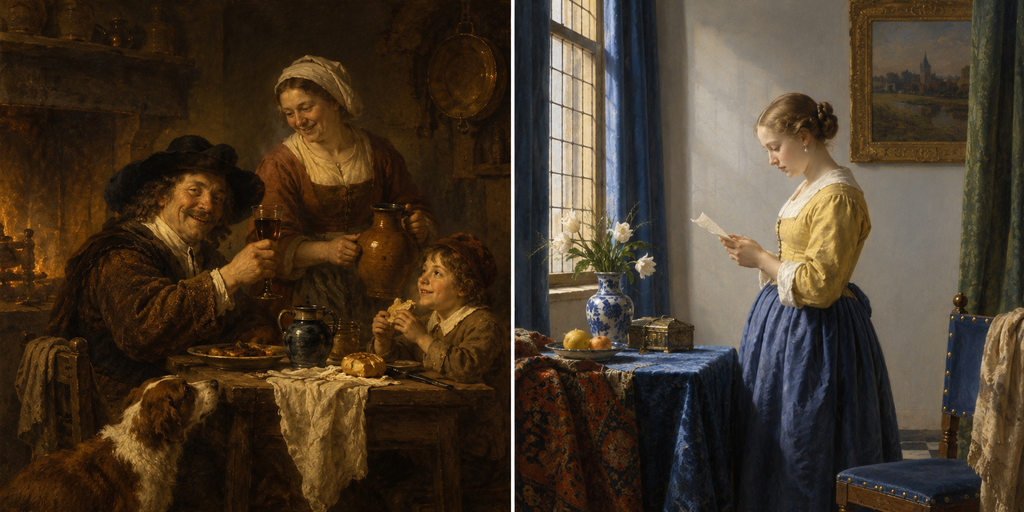
Right: Woman Reading a Letter — inspired by Vermeer
The subject itself does not have to be religious.
The spiritual quality may lie in what the artist perceives within the subject.
Michelangelo’s David is another example. We see the perfection of the youthful human form, but the sculpture conveys something beyond physical anatomy. There is inner strength, dignity, readiness, and integrity. The stone seems to contain the spirit of the human being within it.
Spiritual things are not always “out of this world.” They can be integrated into this world. Human life can be infused with qualities that transcend mundane interests and give dignity to the Soul.
Architecture can accomplish the same thing.
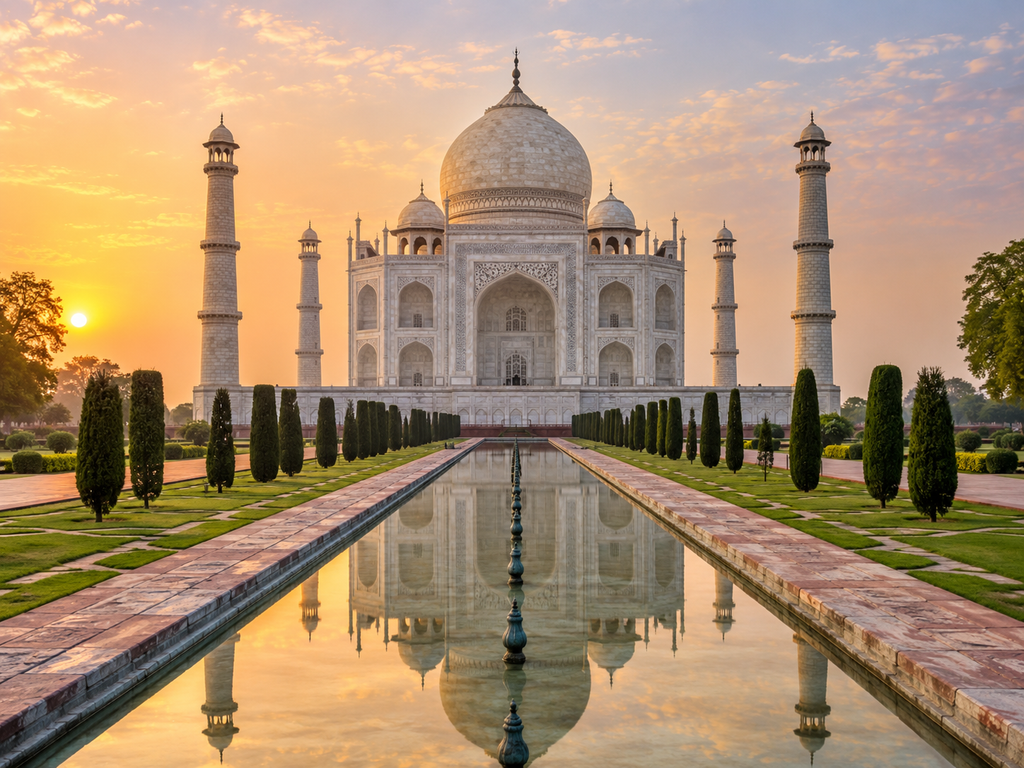
The Taj Mahal was built as a monument to love. Its design raises personal emotion into something more enduring through harmony of form, rhythm, proportion, and geometry. Its great dome suggests wholeness and inclusiveness and, from an esoteric point of view, may also suggest feminine and receptive energy.
Beauty therefore becomes more than decoration.
It is a way of bringing harmony into physical form.
The arrangement of a room, the placement of an object, the use of color, the quality of light, a garden, a piece of music, a painting, or a great work of architecture can all influence consciousness. The sensitive person feels the difference between an environment filled with discord and one created with care and harmony.
To live with beauty is to continually remind ourselves that life need not be governed only by usefulness, material concerns, or disorder.
Beauty brings another quality into experience.
It lifts the eye beyond the object.
It reminds us of harmony when the world appears chaotic.
It gives physical form to something inwardly sensed as order, balance, and perfection.
For me, this is why beauty belongs to the spiritual life. It allows something of the Divine to become visible in ordinary existence.
A life of beauty does not require wealth or grandeur. It requires sensitivity—the ability to recognize harmony, create it where possible, and surround oneself with things that elevate rather than diminish consciousness.
Beauty becomes spiritual when it brings the qualities of harmony, order, dignity, and the Soul into everyday life.
Leave a Reply