Paintings convey energy to both the artist and the viewer. The artist seizes upon the creative process and brings into the artwork a quality or idea that reflects the noumenon of spirit. A work that succeeds in doing this gives the artist great satisfaction. Each time the picture is revisited, it may renew and expand the energy that connects the artist with the original experience.
At the most immediate level, art carries sensory energy. Color, contrast, scale, rhythm, line, texture, sound, and movement affect us before we consciously analyze their meaning. A violent red-and-black painting creates a very different response than a pale, quiet landscape. A cathedral, a mandala, or a turbulent abstract painting can change our attention, mood, and bodily response simply through the force of its forms.
It also carries emotional and psychological energy. The artist concentrates feeling, memory, intention, and imagination into a work. The viewer may later respond to that concentration, sometimes very strongly. A painting can continue to transmit something long after the artist has left the room—or even centuries after the artist has died. The original emotional experience is no longer physically present, yet something of its quality remains accessible through the work.
In the same way, viewers of great art may be invited to share in the numinous experience of the creator. Buddhist mandala art is used specifically for this purpose. Through contemplation and meditation, the mandala draws the viewer beyond its physical design toward the spiritual source that the symbol represents. The image becomes more than decoration; it becomes a vehicle for consciousness.
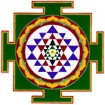
There is also symbolic energy. A symbol may contain many ideas within a single form. A circle, cross, spiral, mandala, sun, serpent, doorway, or other powerful image can awaken associations far beyond its visible shape. Symbols compress meaning. Through contemplation, the viewer expands that meaning again.
This helps explain why symbolic art has played such an important role in spiritual and ceremonial traditions. In many cultures, art has been regarded as a source of power rather than merely as representation. Indigenous peoples of Australia and the Americas, as well as peoples of ancient Europe, created images associated with animals, ancestors, fertility, hunting, renewal, and spiritual forces. Aboriginal peoples of Australia recreated ancestral forms and sacred designs in order to renew their relationship with the ancestral past. Whenever a ritual retraces or recreates a powerful symbol, the meaning contained within that symbol is reinforced, and its energy is renewed for those participating in the ceremony.
Art is therefore a vehicle for visualization. It enables the viewer to enter into a world created through the artist’s intention to invoke a particular quality, idea, or essence. Representational art may awaken feeling, memory, and recognition through familiar forms. Symbolic and abstract art can work differently, inviting the mind to search beneath the visible image and connect several levels of meaning at once.
The most powerful art may move beyond immediate sensation and emotion into the abstract mind. Here the viewer is no longer responding only to what is represented but to the relationships, patterns, ideas, and qualities concealed within the work.
This is where art becomes especially important from an occult point of view.
The artist does not necessarily invent everything that appears in the work. At times the artist may become receptive to something beyond the personality—an ideal, archetype, intuition, or higher impression. The artwork then becomes a vessel through which that impression is brought into form.
The abstract mind reaches toward the unseen. The artist gives that unseen impression physical form through color, line, shape, sound, movement, or material. The viewer then encounters the finished work and may reactivate something of the original experience through perception.
In this sense, art becomes a source of energy when an inner impression is given form strongly enough to awaken a corresponding response in another consciousness. The artist concentrates the idea; the artwork holds its form; the viewer responds and renews its meaning.
Not every artwork carries the same quality of energy. Art may transmit serenity, devotion, joy, grief, agitation, fear, sensuality, aggression, humor, beauty, or confusion. What is important is that the work may convey something of the quality of consciousness from which it was created.
The energy of art, therefore, does not lie only in pigment, stone, sound, or symbol. It is also carried in the consciousness embodied through those materials.
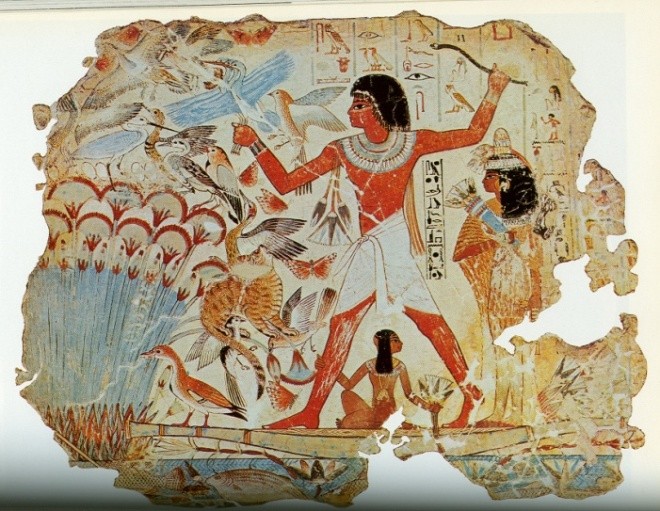
The Egyptians understood the difference between ordinary representation and symbolic form. Scenes of daily life could convey information about people, occupations, rituals, animals, and events. Sacred symbols and hieroglyphic forms could contain meanings that extended far beyond their immediate appearance.
To the initiated, a symbol could operate on several levels at once. Everyone could see its outer form, while its deeper meaning required contemplation, meditation, or spiritual understanding. Secret knowledge was not hidden for secrecy’s sake; it could be understood only when consciousness had developed enough to perceive what the symbol contained.
The symbol therefore becomes more than an image.
It becomes a doorway.
Through color, form, emotion, symbol, and spiritual intention, art can connect the visible and invisible worlds. The artist receives, concentrates, and gives form to an impression. The viewer encounters that form and may respond to it on sensory, emotional, symbolic, mental, or spiritual levels.
In this way, art continues to radiate long after its creation.
Its deepest energy may not reside in the physical object at all, but in the quality of consciousness embodied within it and awakened again in those who experience it.
Leave a Reply